Norwegians in Edderton, Tain and Nigg in WWII
The text below is an online version of a display created by participants in an ARCH course run in 2025 in Edderton and Tain. Contents:
 Introduction
- Norwegians in the Area
- Edderton
- 'Nigg Camp' (Newfield)
- King Haakon At Edderton July 1941
- Pormahomack
- Memories of Norwegians in the Area
- Memories by Norwegians of their stay in the Area
- Objects in Tain Museum
- Norwegians in Nigg
- Norwegians in Dornoch
- Norwegians in Evanton and Ardross
- Further information and Credits

Introduction
 After Germany invaded Norway in April 1940, the Norwegian royal family and goverment escaped to Britain and set up a government in exile. Norwegian citizens, men and women, were recruited into the Norwegian Army, Navy or Air Force. Some were posted to the Edderton, Nigg and Tain area. A project organised by Archaeology for Communities in the Highlands (ARCH) in 2025 researched and collected memories of the activities of the Norwegian army in the area, following on from exploration in 2024 of the Norwegian presence in the Contin and Dingwall Areas. This display tells the story of their activities in the Edderton, Tain, Newfield, Portmahomack and Nigg, together with information about activities slightly further afield at Dornoch, Evanton and Ardross. Further details can be found in the binders of resources at Tain Library.
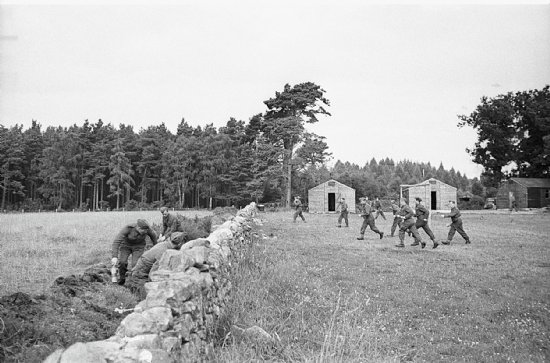
The Norwegian army trained to liberate Norway from the Germans, and helped defend local British military sites such as airfields and railways. They were attached to the British 52nds (Lowland division). As a result, British military documents sometimes refer to them. The Norwegian Archives also have a number of photographs (all black and white photos in this display are from their archives unless stated otherwise).
Norwegians in the Area
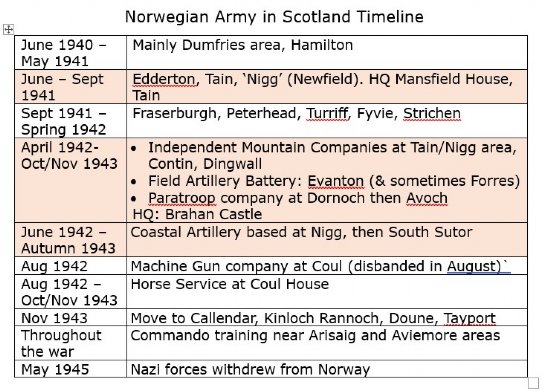
When the Norwegian Brigade moved north from Dumfries in June 1941, they were stationed at Edderton, Tain and ‘Nigg Camp’ (Newfield). Later in 1942 some Norwegians were stationed as part of the Coastal Artillery, first based at Fort Nigg (on the road up to the North Sutor), and then moved to the South Sutor. The headquarters when they were in the area were at Mansfield House, Tain.
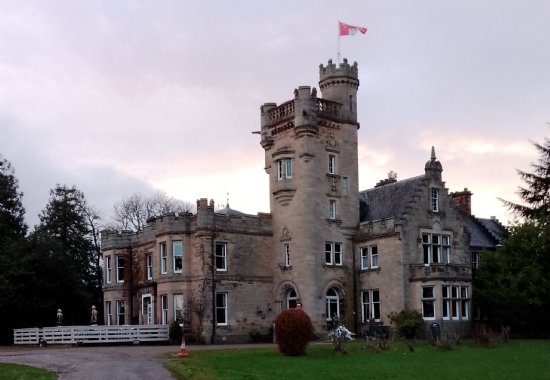
 Local people recall that Norwegians, including Crown Prince Olav kept their horses in the steading at Mansfield House.
Documents and memories suggest that there was also a small camp at Tain, probably in the grounds near the hotel. Does anyone have memories of this?
King Haakon and Crown Prince Olav made visits to the area to boost morale. They stayed at Carbisdale Castle, pictured left, loaned to them by Norwegian shipping magnate Theodore Salvesen.
Edderton
 Norwegian troops were stationed in the distillery, with the rifle companies in tents at ‘a nearby farm’. The Norwegian Archive photographs allow this to be identified as Broombank Farm.
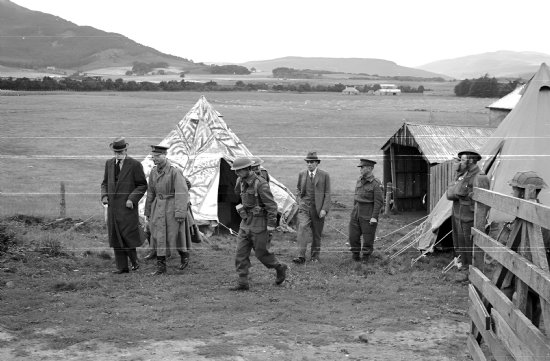
Norwegian military documents state that the Norwegian military postal service moved to Edderton for June – September 1941. We don’t know where this was located, but the most logical site would be the distillery.
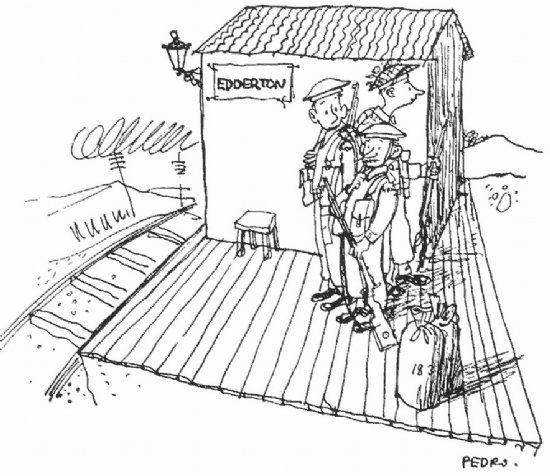
at Edderton. From E.O. Haugen Skotsk
Jord og Norsk Himmel, published 1946.
While here the troops were involved in some training exercises, and helped the Home Guard man the lookout on Edderton Hill. Anti-glider posts were also installed on the shore to prevent German landings, similar to ones at Dornoch across the Firth.
'Nigg Camp' (Newfield)
The Norwegian Battery and Machine Gun company were posted here in July 1941. From the Norwegian photographs, it became clear that this was Newfield near Nigg Station, not Nigg Ferry. Wooden and nissen huts were situated in the trees on the south side of the Newfield Road. Other nissen huts were to the north of Newfield Road, where remains of ablution blocks still survive.

 4
4
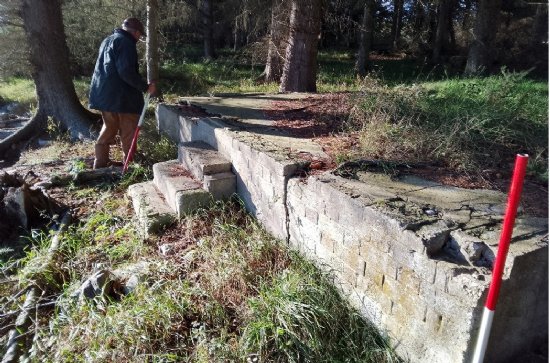
Remains of Nigg Camp
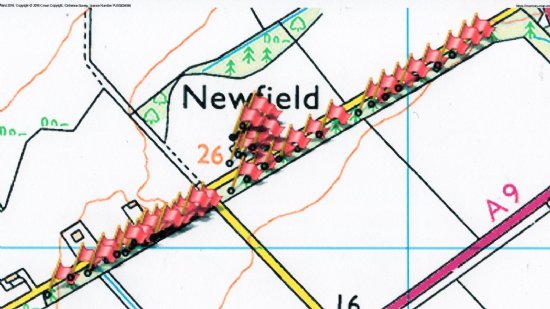
There are foundations of at least 40 bases surviving, with remains of nissen huts still in the trees. It was a substantial camp! A detailed survey of the remains, using aerial photos, is beyond the scope of this project but would be desirable.

King Haakon at Edderton, July 1941
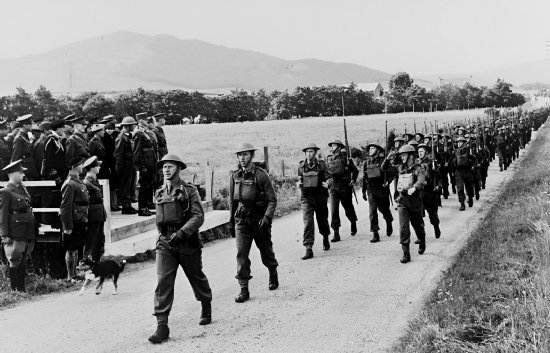
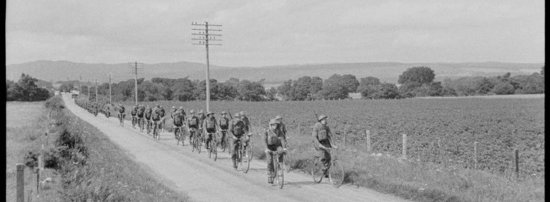
Photos in the Norwegian Archives and Imperial War Museum taken during the visit of King Haakon in July 1941 show a small wooden dais on the side of the road as the King and other officials review the troops. Some are marching, some with Bren guns, some on motorcycles and some on bicycles. They are likely to be from the Distillery, Broombank Farm and Nigg camp at Newfield, and give an indication of the large number of Norwegian personnel stationed in the area.
Portmahomack
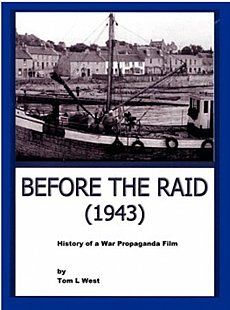 A propaganda film ‘Before the Raid’ was made in Portmahomack in 1943. Around 15 Norwegian soldiers and 15 women and children were drafted in as actors, some of the soldiers to play the Germans. In addition around 60 Norwegian fishermen in 9 boats were used on weekends. The film is a fictionalised story of Norwegian fishermen resisting Nazi occupation.
Copies of the film and a book, Before the Raid (1943). History of a war propaganda film by Tom L. West can be purchased from Tarbat Discovery Centre (as of 2026).
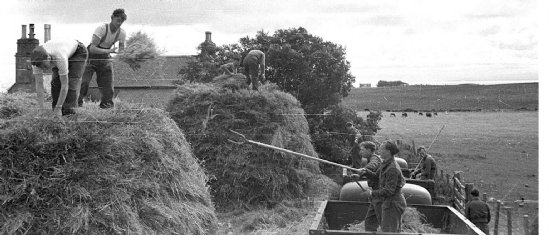
Pictures from the Norwegian Archives also show some landscape pictures of the village as well as Norwegian soldiers helping at the harvest at Hilton Farm, Portmahomack.
Memories of Norwegians in the Area
 A number of people have contributed memories or stories about Norwegians in the area – but we would welcome more!
- The Norwegians had a canteen in the Freemason’s Hall in Tain, managed by Norwegian A.T.S. women. They commandeered Munro’s shop in Tain for their dental practice and The Grove for a medical centre.
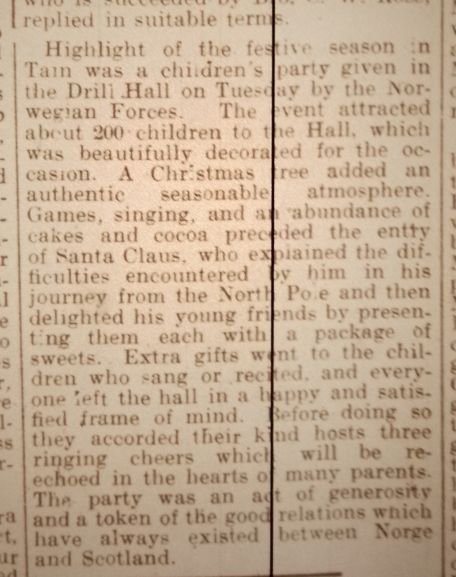
- The Norwegians held a Christmas party at the Drill Hall for children, also reported in the North Star 2 Jan 1943 (right)
- The Norwegians practised cliff assaults by Shandwick.
- There were at least three local marriages: Sophie Christie, Dawn Ritchie, and Ann, sister of Addie Sangster from Hilton.
- There was also a march past in Tain when King Haakon visited.
See the transcript with further memories (available from the ARCH Website library in Project Reprts folder), and the short film from Tain Museum where Forbie Urquhart, Donnie Macleod, Paul Lippock and Wattie Louden share their memories of Norwegians in the war.
Memories by Norwegians of Their Stay in the Area
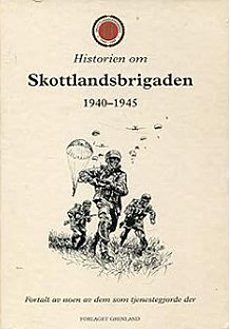 Two Norwegian books, Skotsk Jord og Norsk Himmel by E.O. Haugen (1946) and Historien om Skottlandsbrigaden 1940-1945 (1997) by Julian Holmås record memories of Norwegian soldiers in the area (thanks to Oddbjørn Johansen for details and translations).
- In the early days we were located just outside the cozy, small town of Tain where we had a hotel and some barracks at our disposal
- Summer 1941 We arrived at Nigg Camp right up by Invergordon (midsummer 1941). It was a large camp where we lived in Nissenhuts. …
- The headquarters for the 3rd Mountain Company in the fall of 1942 was Nigg with 20 sergeants and 30 corporals and soldiers in each Nissen hut
- A number of exercises were carried out based in Calrossie Woods south of Tain
See the transcript with further memories (available from the ARCH Website library in Project Reports folder).
Objects in Tain Museum
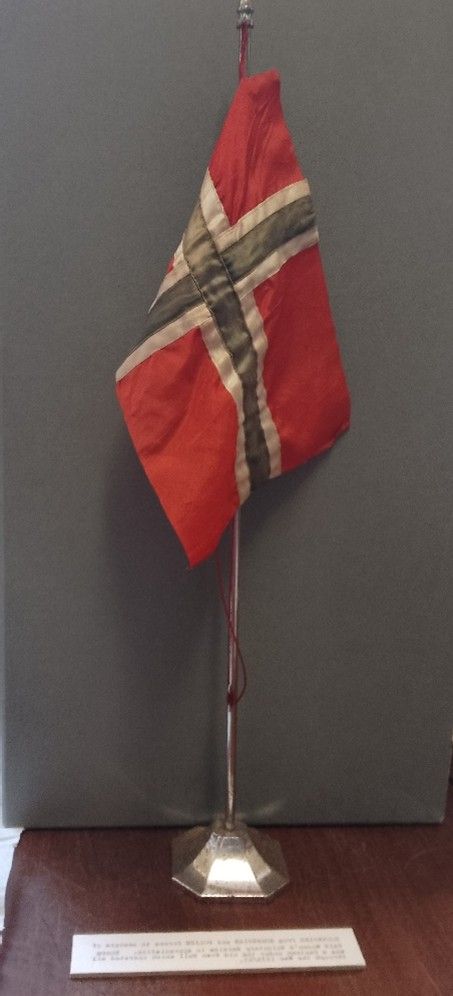 Tain Museum has a number of objects, documents and films relating to the Norwegians in the area. These incluude
- Letter thanking T.S. Fletcher for providing gerkins for King Haakon’s lunch
- Song books with military songs
- Book and programme celebrating King Haakon’s birthday
- Flag said to have been given by Norwegians to the WAAFs running the tea room
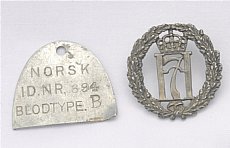
- Dog tag and cap badge
- Film recording of Forbie Urquhart, Donnie Macleod, Paul Lippock and Wattie Louden with their memories of Norwegians in the war
Norwegians in Nigg
Norwegian soldiers were also from 1942 stationed at Fort Nigg as part of the Coastal Artillery Unit, moving to the South Sutor in 1943. King Haakon visited them in July 1943, and a detailed account was published of the visit in Norsk Tidend (translation available in project binder in Tain Library).
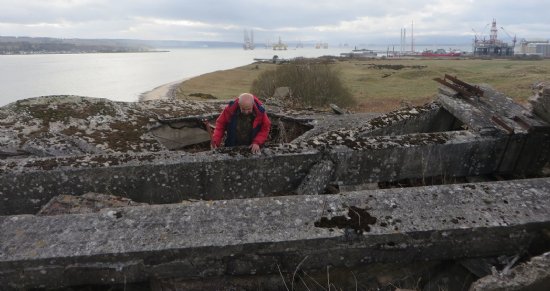
According to The Parish of Nigg by Barbara Scott and Anne Gordon (compiled by Nigg W.R.I., published 1967) there was also an army camp on the Golf Course. It is not known if any Norwegians were there, or if they were all at Fort Nigg. However, the authors state in the book ‘Quite a lot of Norwegians were stationed at the army camps’, without saying which camps.
In Batteriet. Historien om det norske batteriet I Skottland 1940-1945 by Johs Orderud, the author reported that ‘On 10-11 July 1941 the Battery moved to the small village of Nigg… The camp consisted of Nissen huts. The Brigade’s Machine Gun Company was in the same “Nissen Camp”. The camp in Nigg was about 10 km from Tain.’ Does this refer to Nigg Camp (Newfield) or the Golf Course camp?
Norwegians in Dornoch
Various Norwegian units were stationed in Dornoch in 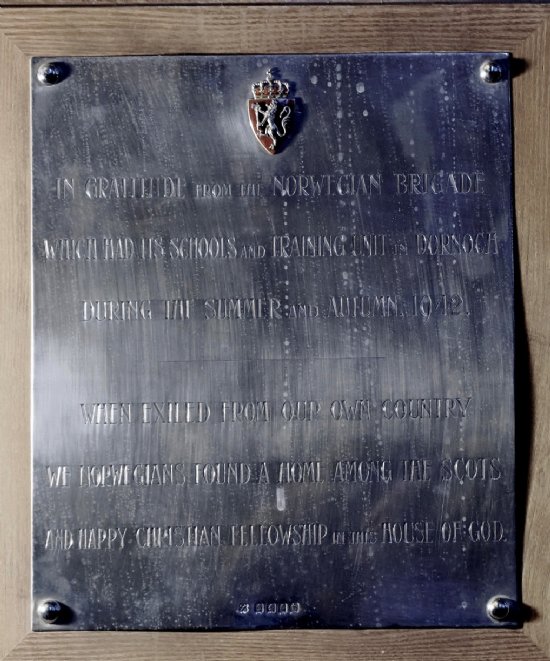 1942. The training unit was based at the L.M.S. Hotel (now Dornoch Hotel) into 1943. The parachute company was in nissen huts in a grove near the Earl’s Cross. The command school was near the golf course in nissen huts, with the golf course used as a practice ground, though all the holes were fenced off. A shooting range was near the sea. The radio school was in a disused church. Military police were in the Old Police House. A summer house near the hotel became a hospital. Officers stayed at Burghfield House. A useful account by Einar Diesen published in Aftenposten 6th August 1949 describes these in some detail (thanks for Oddbjørn Johansen for supplying a copy, and reproduced in the project binder in Tain Library).
The Norwegians were popular in the town. After the war the Norwegian government sponsored a memorial in Dornoch Cathedral, thanking Dornoch for their help in WWII: ‘In gratitude from the Norwegian Brigade which had schools and a training unit in Dornoch during the summer and autumn 1942 when excluded from our own country. We Norwegians found a home among the Scots and happy Christian fellowship in the House of God.’
Norwegians in Evanton and Ardross
In 1942 the Norwegian Field Artillery moved to Evanton, and were there until at least 1943, with occasional deployment to Forres. Officers were in Balconie Castle, but other servicemen were billeted in various locations. The Norwegians probably helped to protect Evanton airfield. A local resident remembers King Haakon’s visit here too!
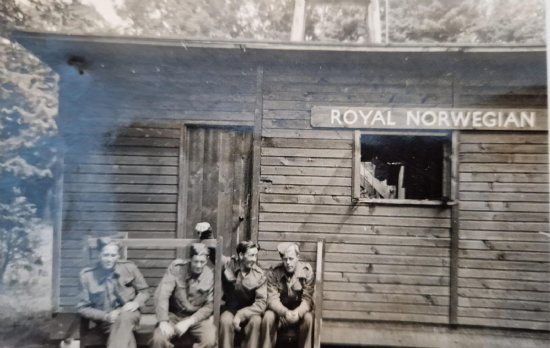
The Mugdoch Hut Canteen was in a wooden building near the church, used as a canteen for service personnel. Martin Welhaven, the son of a soldier stationed in Evanton sent this picture. The Mugdoch was busy throughout the war, serving Norwegians, Canadians, Newfoundlanders, Poles, Mauritians, French and Indian soldiers.
The Norwegian hospital was in Achandunie House, between Alness and Ardross. However, we know of Norwegian doctors working in other hospitals in the area.
Further Information and Credits

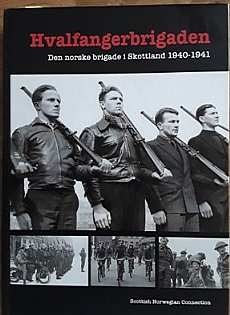 Three Norwegians, George Michael Bratli, Kjell Johansen, and Oddbjørn Johansen, are researching the story of the Norwegians in Scotland, as part of the Scottish Norwegian Connection. They have published their first book Hvalfangerbridgaden. Den norske brigade i Skottland 1940-1941 which focusses on the early years in the Dumfries area, and are currently at work on a book covering the time the Norwegians were in this area. They have been very generous with their research, and participated in zoom sessions as part of this project. Johan Martin Welhaven, whose father was based at Evanton, has also been very helpful.
There is currently little written in English about Norwegians in Scotland, and even less about the local connections. Some sources with translation are available from the project binder at Tain Library, and the one associated with the Contin project, at Dingwall Library.
If you have any stories about Norwegians in this area, we would love to hear them!
ARCH would like to thank the Scottish Power Beinn Tharsuinn Windfarm Community Fund (Tain and Edderton Community Councils) for help towards venue hire. Thanks to Jason Ubych of Tain Museum for hosting a visit and looking out information, and Janey Clarke for Edderton information. And thanks to all those who attended the sessions and helped research this little-known history.
Latest News...
30/08/2026 - Map Scanning Project Update
Over the last two weeks of August, our incredible team of 22 volunteers, led by the amazin... More >>
15/07/2026 - ARCH Digitising Highland Maps and Plans project - volunteers wanted!
Welcome Claire Boardman, our newly appointed project officer for the Digitish Highland Map... More >>
10/06/2026 - Wanted: project officer for ARCH Digitising Highland Maps and Plans project
ARCH is looking to recruit a project officer for The Digitisng Highland Maps and Plans pro... More >>
Site of the Month
 10/04/2021 - Easter Raitts township
Easter Raitts township Photo: Highland HER Although the Highlands is dotted with de... More >>
Find of the Month
 25/07/2022 - Steatite Vessels
These stone vessels, many with handles, were found at a variety of sites in Sutherland and... More >>